Abstract
Over the last decade, sustainability has moved from a peripheral concern to a core operational priority in fine dining restaurant management.. Fine dining refers to the high-end eateries that are paired with superior food, sophisticated environment, and professional hospitality that justify a luxury price point. Sustainability comprises practices that harmonize environmental care, social fairness, and economic viability, in accordance with the United Nations Sustainable Development Goals. The main aim of this research is to map the structural and thematic evolution of sustainability literature within the restaurant sector, identifying key research gaps and future directions. This study reviews 172 Scopus-listed publications from 2015 to 2025 using bibliometric tools and VOSviewer. By mapping performance and scientific connections, it identifies the key authors, geographic contributors, and core subject areas relevant to the future of fine dining. Findings highlight a significant upward trajectory following 2020, linked to global sustainability pushes and pandemic changes. Themes have moved from basic waste reduction to encompass social equity, regional sourcing, and ethical branding. The paper addresses a major key gap: While research has grown, specific gaps remain in meta-analytic reviews that bridge the gap between back-of-house operations and consumer-facing ethical storytelling.
Keywords
Sustainable Practices, Restaurants, Fine Dining, Bibliometric Analysis, Co-Authorship Analysis, VOSviewer, Food Waste, Hospitality Industry, Scopus
1. Introduction
Sustainability has emerged as a central concern in the global hospitality industry, particularly within the fine dining sector, where operational excellence, ethical responsibility, and brand reputation are closely intertwined. Between 2015 and 2025, restaurants have faced mounting pressure to reduce environmental impacts, manage food waste, adopt responsible sourcing practices, and align with global sustainability frameworks
| [1] | Jones, P., Hillier, D., and Comfort, D. Sustainability in the hospitality industry: Some personal reflections on corporate challenges and research agendas. International Journal of Contemporary Hospitality Management, 2016, 28(1), 36-67.
https://doi.org/10.1108/IJCHM-02-2015-0072 |
| [2] | Filimonau, V., and De Coteau, D. A. Food waste management in hospitality operations: A critical review. Tourism Management, 2019, 71, 234-245.
https://doi.org/10.1016/j.tourman.2018.10.009 |
| [3] | Martín-Ríos, C., Demen-Meier, C., Gössling, S., and Cornuz, C. Food waste management innovations in the foodservice industry. Waste Management, 2018, 79, 196-206.
https://doi.org/10.1016/j.wasman.2018.07.033 |
[1-3]
. Fine dining establishments, due to their high resource intensity and premium positioning, are especially scrutinized by consumers and policymakers alike. Academic interest in sustainable restaurant practices has grown substantially over the last decade. This reflects broader societal concerns about climate change, responsible consumption, and sustainable tourism development
| [3] | Martín-Ríos, C., Demen-Meier, C., Gössling, S., and Cornuz, C. Food waste management innovations in the foodservice industry. Waste Management, 2018, 79, 196-206.
https://doi.org/10.1016/j.wasman.2018.07.033 |
[3]
. Despite this growth, existing literature remains dispersed across disciplines. This makes it difficult to identify dominant research themes, collaboration patterns, and intellectual structures. Bibliometric analysis offers a systematic and objective approach to mapping such complex research landscapes
.
Bibliometric analysis is a quantitative technique that statistically maps the structure, evolution, productivity, and intellectual networks of a research field
| [4] | Zupic, I., and Čater, T. Bibliometric methods in management and organization. Organizational Research Methods, 2015, 18(3), 429-472. https://doi.org/10.1177/1094428114562629 |
| [5] | Donthu, N., Kumar, S., Mukherjee, D., Pandey, N., and Lim, W. M. How to conduct a bibliometric analysis: An overview and guidelines. Journal of Business Research, 2021, 133, 285-296.
https://doi.org/10.1016/j.jbusres.2021.04.070 |
[4, 5]
. In the context of this study, "Fine Dining" refers to full-service restaurants with high-quality standards and formal service
| [6] | Harrington, R. J., Ottenbacher, M. C., and Way, S. A. QSRs, casual dining or fine dining? Variations in restaurant categories. Journal of Hospitality Marketing & Management, 2017, 26(7), 741-760. https://doi.org/10.1080/19368623.2017.1317390 |
[6]
, while " Sustainability involves practices that harmonize environmental care, social fairness, and economic viability, in accordance with the United Nations Sustainable Development Goals
| [7] | United Nations. Transforming our World: The 2030 Agenda for Sustainable Development. UN Publishing; 2015. [Online] Available: https://sdgs.un.org/goals |
[7]
.
Despite the fact that the search query used the broad term “restaurants,” the results are highly applicable to fine dining due to its resource-intensive nature and clarity as a high-end restaurant segment that can guide sustainable novelty
| [8] | Blanco-Moreno, S., Aydemir-Dev, M., Santos, C., and Bayram-Arlı, N. Emerging sustainability themes in the hospitality sector: A bibliometric analysis. European Research on Management and Business Economics, 2023, 29(3), 100231.
https://doi.org/10.1016/j.iedeen.2023.100231 |
| [9] | Reynolds, J. Sustainable practices in the restaurant industry: A mid-decade review. ICHRIE Research Reports, 2023, 9(4), 32-48. |
[8, 9]
.
This study addresses the following research questions:
RQ1: Who are the most prolific authors in sustainable practices research related to fine dining (2015–2025)?
RQ2: Which are the most prolific countries?
RQ3: Which document types have the maximum number of papers in the area?
RQ4: In which years have the maximum number of papers been published?
RQ5: Which authors have co-authored the maximum with other authors?
RQ6: Which countries’ authors have co-authored the maximum with the authors of other countries?
RQ7: What are the most frequently appearing keywords?
2. Literature Review
Existing bibliometric studies on hospitality sustainability have increased, yet few isolate fine dining. Research into hospitality sustainability has matured from a narrow focus on simple eco-friendly practices to a broader strategy that guarantees businesses stay profitable and treat society fairly. Researchers are increasingly using bibliometric analysis to track this evolution, showing how restaurants and the fine dining sector are redefining their roles in the face of global crises. Initial studies focused on corporate sustainability disclosures, pinpointing a substantial discrepancy between the high-level environmental policies advertised by hospitality corporations and their actual day-to-day execution
| [10] | Jones, P., Hillier, D., and Comfort, D. Sustainability in the hospitality industry: reflections on the journals. International Journal of Contemporary Hospitality Management, 2016, 28(1), 36-67. https://doi.org/10.1108/IJCHM-11-2014-0572 |
[10]
. Within fine dining operations, waste mitigation has emerged as a top-tier research theme. Fundamental research proven that the operational demands of full-service kitchens make mapping waste more complex than in simpler quick-service environments, requiring specialized approaches and custom-fit strategies to solve the problem effectively
| [11] | Filimonau, V., and De Coteau, D. Food waste management in hospitality operations: A critical review. International Journal of Hospitality Management, 2019, 76, 269-279.
https://doi.org/10.1016/j.ijhm.2018.05.011 |
[11]
. There is an ongoing debate between high–end dining and environmental ethics called the "Luxury-Sustainability Paradox." Essentially, experts remain uncertain if gourmet cuisine restaurants can ever genuinely coexist with the principles of sustainable development
. Newer studies suggest that "conspicuous responsibility" is the solution. Within this framework Luxury brands adopt sustainability not only as a policy but also as a main pillar of their brand identity, utilizing their responsibility to the planet as a way to define their high-end status
. The shift toward sustainable operations is accelerating thanks to the digitalization of the culinary industry. With advanced new digital tools, restaurants can now provide detailed ESG (Environmental, Social, and Governance) data, building a foundation of transparency and trust with a growing targeted audience of "conscious consumers”
. Additionally, the rise of "Socially Responsible Gastronomy" means restaurants are now seen as social catalysts. In this view, establishments, beyond serving meals, actively participated in the stability and improvement of their local communities
. By analyzing the last eleven years of scholarly output, this study identifies a clear trajectory from technical waste reduction (2015–2018) toward a holistic, ethics-driven branding approach (2020–2025).
3. Research Methodology
This research conducts a bibliometric analysis of academic literature published from 2015 to 2025 concerning sustainability practices in the context of restaurants. This method is chosen because bibliometrics is highly effective at measuring research output, charting the underlying knowledge structure, and tracking how key topics have changed over time
| [4] | Zupic, I., and Čater, T. Bibliometric methods in management and organization. Organizational Research Methods, 2015, 18(3), 429-472. https://doi.org/10.1177/1094428114562629 |
| [5] | Donthu, N., Kumar, S., Mukherjee, D., Pandey, N., and Lim, W. M. How to conduct a bibliometric analysis: An overview and guidelines. Journal of Business Research, 2021, 133, 285-296.
https://doi.org/10.1016/j.jbusres.2021.04.070 |
[4, 5]
. To ensure robust coverage of high-quality scholarly literature, data were retrieved from leading scientific databases.
Scopus complements Web of Science by offering broader journal coverage, especially in applied fields such as hospitality, food science, and environmental management
. Including Scopus reduces disciplinary bias and increases dataset comprehensiveness.
VOSviewer version 1.6.20.0 was used to construct and visualize bibliometric networks due to its efficiency in handling large datasets and generating co-authorship, co-citation, and keyword clusters
.
Search query: “sustainable practices” AND “restaurants” (Title/Abstract/Keywords) in Scopus, conducted on 13 November 2025. Inclusion criteria: English-language documents, published 2015–2025. Exclusion criteria: Non-English, pre-2015, post-2025, or irrelevant hits. 172 records were retrieved. No manual screening was required beyond the query.
In VOSviewer, “link strength” represents the strength of association (e.g., number of co-authored papers or keyword co-occurrences)
.
The methodology is two-fold:
1) Measuring Impact (Performance Analysis): Quantifying the scale of documents and years, identifying the most significant authors and countries in both areas.
2) Mapping Connections (Science Mapping): Visualizing the relationships between studies using co-authorship with authors, co-authorship with countries, and co-occurrence with all keyword connections in both areas.
By combining these analyses, the study aims to provide a holistic picture of research trends over the eleven years.
For sustainable practices in restaurants, data were collected from the Scopus database. The following search string was used within the document topic field: “sustainable practices” AND “restaurants”. Searching within the document topic field provides results that contain the selected keyword in the document’s title, abstract, or author keywords. The search was conducted on 13 November 2025. The final result was 172 records on sustainable practices in restaurants.
The final sample was examined through bibliometric analysis. In this regard, two techniques were primarily used: performance analysis and science mapping.
The Scopus database was used for analyzing the large amount of data about various papers included in this study. Then, the VOSviewer software was used for creating a co-authorship network map, an inter-country co-authorship network map, and a keywords co-occurrences network map.
4. Results
In this section, performance analysis is presented on the basis of different performance indicators, which are mentioned in the research questions, by using MS-Excel.
4.1. Year-Wise Publications (2015–2025)
Table 1. Year-Wise Publications on Sustainable Practices in Restaurants.
Year | Publications |
2015 | 2 |
2016 | 3 |
2017 | 4 |
2018 | 6 |
2019 | 8 |
2020 | 12 |
2021 | 15 |
2022 | 17 |
2023 | 24 |
2024 | 38 |
2025 | 42 |
Total | 172 |
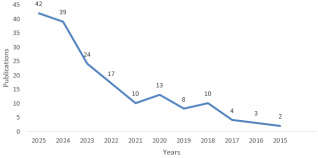
Figure 1 presents a clear upward trend in publications over eleven years. The field begins with minimal output in 2015–2017, followed by gradual growth from 2018 to 2020, and then shows a sharp rise from 2021 onward. The number of publications increases significantly in 2022 (17 articles) and 2023 (24 articles), reaching its peak in 2024 with 39 publications.
This continuous rise indicates a rapidly expanding research interest, strongly influenced by:
1) Increased emphasis on sustainability in global hospitality,
2) Post-COVID-19 focus on food safety and hygiene,
3) Policy pressure to adopt sustainable operational practices, and
4) Global alignment with the United Nations Sustainable Development Goals (SDGs)
| [7] | United Nations. Transforming our World: The 2030 Agenda for Sustainable Development. UN Publishing; 2015. [Online] Available: https://sdgs.un.org/goals |
[7]
.
The strong growth over recent years demonstrates that sustainability in restaurant operations is becoming a central research theme, with momentum likely to continue.
Figure 1. Year-Wise Publications on Sustainable Practices in Restaurants.
4.2. Most Prolific Authors
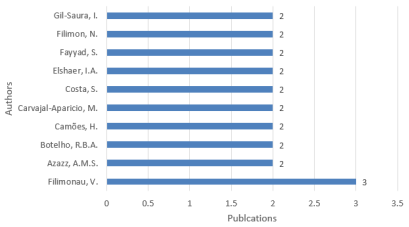
Figure 2 illustrates the publication productivity of the top 10 authors in the domain of sustainable practices in restaurant research. The distribution is highly skewed, with Filimonau V. emerging as the most productive author with three publications, while the remaining authors—such as Maia B., Azazz A. M. S., Wijesinghe G., Sirieix L., Ruiz-Molina M. E., Phu S. T. P., Nakano E. Y., Michaud M., and Melo C.—each contributed two publications.
This pattern reflects a long-tail authorship structure, where only a few authors show slightly higher productivity, while the majority contribute at similar, minimal levels. The relatively low publication counts even among the top authors indicate that the field is still emerging, fragmented, and interdisciplinary, without dominance by a single research group. This also suggests opportunities for future collaboration and consolidation of expertise.
Figure 2. Most Prolific Authors with Maximum Publications.
4.3. Country-Wise Distribution of Publications
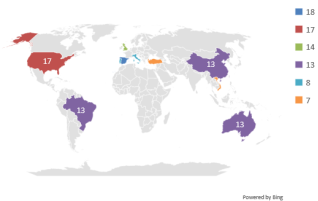
Figure 3 presents a country-wise distribution that reflects a geographically diverse and globally engaged research landscape. The top contributing countries are:
1) Spain (18 publications),
2) United States (17),
3) United Kingdom (14),
4) Australia (13), followed by other strong contributors such as China, India, Italy, Malaysia, South Korea, and Indonesia (counts slightly lower based on dataset).
Spain leads the ranking, indicating strong academic emphasis on sustainability, tourism, and hospitality research. The United States, United Kingdom, and Australia similarly show considerable output, consistent with their advanced research ecosystems and active hospitality sectors. The presence of both developed and developing countries in the top 10 demonstrates worldwide recognition of the importance of sustainable restaurant practices.
This global distribution suggests that sustainability challenges—such as energy efficiency, waste reduction, and sourcing practices—are universal concerns for the hospitality industry.
Figure 3. Country-Wise Publications.
4.4. Document-Type Distribution
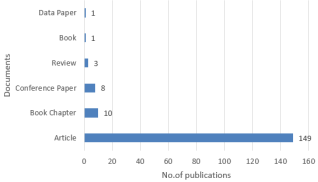
The analysis of document types revealed a clear dominance of journal articles (149 publications), highlighting that this field is primarily advanced through peer-reviewed empirical and conceptual research. The remaining top document types include:
1) Book Chapters (10),
2) Conference Papers (8),
3) Review Articles (3),
4) Books (1),
5) Data Papers (1).
The overwhelming presence of articles indicates strong academic interest supported by rigorous research methods. However, the limited number of review papers shows a gap in meta-analytic or synthesis-based studies, signaling opportunities for future researchers to consolidate existing knowledge. The presence of conference papers and book chapters also suggests ongoing scholarly discussions but at a comparatively modest scale.
Overall, this pattern reflects an emerging but increasingly structured research area dominated by empirical evidence and journal-driven output.
Figure 4. Documents with Number of Publications.
5. Science Mapping Analysis on Sustainable Practices in Restaurants
The following subsections present the VOSviewer network outputs along with the corresponding numerical tables. This analysis draws on a Scopus dataset comprising 172 documents on sustainable practices in restaurants, processed through VOSviewer software for science mapping
.
Bibliometric indicators—co-authorship by country and author, alongside keyword co-occurrence—provide a multifaceted view of research landscapes, collaborations, and thematic evolution. These visualizations, generated via network diagrams and underlying tabular data, illuminate patterns in geographic distribution, scholarly contributions, and conceptual interconnections. The findings highlight a maturing field where waste management, environmental stewardship, and consumer-driven innovations intersect, offering actionable insights for restaurant operators, policymakers, and researchers aiming to advance sustainability
| [3] | Martín-Ríos, C., Demen-Meier, C., Gössling, S., and Cornuz, C. Food waste management innovations in the foodservice industry. Waste Management, 2018, 79, 196-206.
https://doi.org/10.1016/j.wasman.2018.07.033 |
| [7] | United Nations. Transforming our World: The 2030 Agenda for Sustainable Development. UN Publishing; 2015. [Online] Available: https://sdgs.un.org/goals |
[3, 7]
.
5.1. Co-Authorship Analysis by Author: Scholarly Influence and Networks
Shifting to individual contributions, the author co-authorship table captures 602 scholars across the 172 documents, with metrics on documents, citations, and link strengths. Collaboration remains modest, as over 90% of authors have single publications, reflecting the field's interdisciplinary yet fragmented nature.
Table 2 highlights the top collaborators.
Table 2. Top Authors in Co-Authorship (Documents, Citations, and Link Strength).
Rank | Author(s) | Documents | Citations | Total link strength |
1 | Filimonau, Viachaslau | 3 | 145 | 8 |
2 | Martín-Ríos, Carlos | 3 | 53 | 8 |
3 | Ayyaz, Alaa M. S. | 2 | 16 | 10 |
4 | Bagur-Femenias, Llorenç | 2 | 120 | 5 |
5 | Botelho, Raquel Braz Assunção | 2 | 17 | 6 |
6 | Camões, Henrique Freitas | 2 | 1 | 11 |
7 | Carvajal-Aparicio, Marta | 2 | 3 | 4 |
8 | Costa, Sandrine | 2 | 10 | 6 |
9 | Elshaer, Ibrahim A. | 2 | 16 | 10 |
10 | Fayyad, Sameh | 2 | 16 | 10 |
Viachaslau Filimonau stands out with 3 documents and 145 citations. His work often explores behavioral interventions for food waste in European hotels and restaurants
| [19] | Filimonau, V., Todorova, E., Mzembe, A., Sauer, L., and Yankholmes, A. A comparative study of food waste management in full-service restaurants. Journal of Cleaner Production, 2019, 214, 558-570.
https://doi.org/10.1016/j.jclepro.2018.12.242 |
[19]
. Carlos Martín-Ríos (3 documents) complements this with 53 citations on innovation in sustainable hospitality supply chains
| [3] | Martín-Ríos, C., Demen-Meier, C., Gössling, S., and Cornuz, C. Food waste management innovations in the foodservice industry. Waste Management, 2018, 79, 196-206.
https://doi.org/10.1016/j.wasman.2018.07.033 |
[3]
. High-link authors like Henrique Freitas Camões (11 links) demonstrate bridging roles, connecting to diverse teams on topics like ethical sourcing.
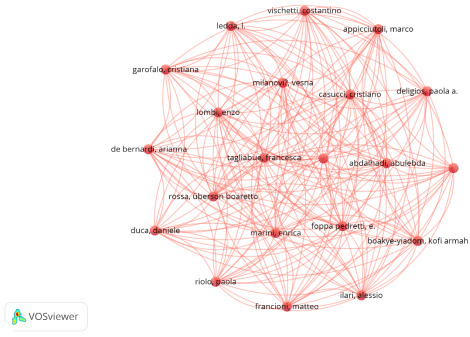
Figure 5. Co-Authorship Analysis by Author.
The corresponding VOSviewer network depicts a dense, red-dominated cluster centered on Italian scholars (e.g., Vischetti Constantino, Appicciutoli Marco), with radial connections to outliers like Boakye-Yiadom Kofi Armah (Ghanaian perspective on waste valorization)
| [11] | Filimonau, V., and De Coteau, D. Food waste management in hospitality operations: A critical review. International Journal of Hospitality Management, 2019, 76, 269-279.
https://doi.org/10.1016/j.ijhm.2018.05.011 |
[11]
. Node size scales with document count, while edge density illustrates collaboration hubs—thicker lines among European authors suggest established networks, potentially from EU Horizon projects. This visualization reveals silos (e.g., isolated Asian authors) but also hubs fostering cross-cultural insights, such as joint US-UK studies on consumer perceptions of green dining
.
5.2. Co-Authorship Analysis by Country: Global Collaboration Patterns
Co-authorship networks at the country level reveal the geographic footprint of research on sustainable restaurant practices, emphasizing collaborative ties that transcend borders. The dataset identifies 63 countries contributing to the 172 documents, with a total of 494 citations and varying link strengths reflecting co-publication intensity.
Table 3 summarizes the top contributors, ranked by document count.
Table 3. Co- authorship analysis by country.
Rank | Country | Documents | Citations | Total Link Strength |
1 | Spain | 18 | 266 | 10 |
2 | United States | 17 | 284 | 10 |
3 | United Kingdom | 14 | 494 | 13 |
4 | Australia | 13 | 295 | 8 |
5 | Brazil | 13 | 103 | 3 |
6 | China | 13 | 308 | 13 |
7 | Italy | 8 | 199 | 5 |
8 | Portugal | 8 | 62 | 5 |
9 | Turkey | 7 | 126 | 3 |
10 | Vietnam | 7 | 58 | 4 |
Spain leads in publication volume (18 documents), likely due to its robust tourism sector and EU-funded initiatives on food waste reduction in hospitality
. The United States follows closely (17 documents), with a focus on empirical studies of green certifications in urban restaurants. Notably, the United Kingdom punches above its weight in citations (494), suggesting high-impact work on policy integration, such as aligning restaurant practices with UN Sustainable Development Goals (SDGs). Emerging players like Pakistan (6 documents, 10 link strength) and Saudi Arabia (6 documents, 10 links) indicate rising interest in the Global South, possibly linked to Vision 2030 reforms emphasizing sustainable tourism.
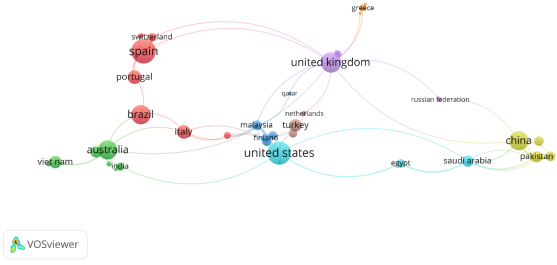
Figure 6. Co-Authorship Analysis by Country Networking.
The network diagram (inferred from VOSviewer output) visualizes these as an interconnected graph with the United States as a central node (cyan cluster), linked bidirectionally to the United Kingdom (purple) and China (yellow)
| [11] | Filimonau, V., and De Coteau, D. Food waste management in hospitality operations: A critical review. International Journal of Hospitality Management, 2019, 76, 269-279.
https://doi.org/10.1016/j.ijhm.2018.05.011 |
[11]
. Edge thickness denotes link strength, with thicker connections (e.g., US-UK) representing frequent co-authorships, often in journals like the Journal of Sustainable Tourism. Peripheral nodes like Vietnam (green) and Brazil (red-orange) show sparser but growing ties, highlighting opportunities for North-South collaborations to address context-specific challenges, such as tropical waste composting in Brazil or urban food security in Vietnam.
This pattern underscores a Euro-American core with Asian expansion, where total link strengths (e.g., 13 for China) signal potential for knowledge transfer on scalable practices like zero-waste menus
| [3] | Martín-Ríos, C., Demen-Meier, C., Gössling, S., and Cornuz, C. Food waste management innovations in the foodservice industry. Waste Management, 2018, 79, 196-206.
https://doi.org/10.1016/j.wasman.2018.07.033 |
[3]
.
5.3. Keyword Co-Occurrence Analysis: Thematic Mapping and Interconnections
Keyword co-occurrence, extracted from titles, abstracts, and author keywords, identifies 1,352 terms across the 172 documents, with "sustainability" as the nexus (85 occurrences, 34 link strength). This metric quantifies thematic density, where higher link strengths denote frequent pairings.
Table 4 lists the top 20 keywords.
Table 4. Top Keywords in Co-Occurrence (Occurrences and Total Link Strength).
Rank | Keyword | Occurrences | Total Link Strength |
1 | Sustainability | 85 | 34 |
2 | Sustainable development | 41 | 29 |
3 | Food waste | 31 | 38 |
4 | Restaurant | 27 | 23 |
5 | Waste management | 25 | 16 |
6 | Restaurants | 25 | 132 |
7 | Human | 18 | 22 |
8 | Environmental impact | 17 | 20 |
9 | Article | 17 | 14 |
10 | Hospitality industry | 16 | 35 |
Dominant themes cluster around environmental imperatives ("food waste," 31 occurrences) and operational strategies ("waste management," 25), with "restaurants" (25 occurrences, 132 links) as a pivotal node linking to consumer ("perception," 14) and economic ("marketing," 13) dimensions
| [20] | Filimonau, V., Matute, J., and Mika, M. The determinants of food waste management in the hospitality sector. International Journal of Hospitality Management, 2021, 94, 102844.
https://doi.org/10.1016/j.ijhm.2020.102844 |
[20]
. Broader ties to "sustainable development" (41) align with SDG 12 (Responsible Consumption and Production), while "COVID-19" (10) reflects pandemic-era shifts toward resilient supply chains
| [7] | United Nations. Transforming our World: The 2030 Agenda for Sustainable Development. UN Publishing; 2015. [Online] Available: https://sdgs.un.org/goals |
[7]
.
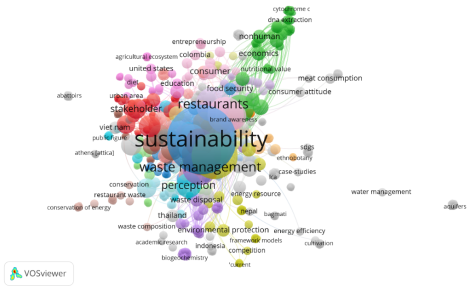
Figure 7. Keywords in Co-Occurrence Networking.
The VOSviewer keyword network renders this as a multi-cluster graph: a large blue-green core around "sustainability" connects to orange "waste management" satellites, with yellow extensions to "consumer behavior" (5 occurrences, 33 links)
| [11] | Filimonau, V., and De Coteau, D. Food waste management in hospitality operations: A critical review. International Journal of Hospitality Management, 2019, 76, 269-279.
https://doi.org/10.1016/j.ijhm.2018.05.011 |
[11]
. Node proximity indicates co-occurrence frequency—e.g., "food waste" tightly bound to "environmental impact" (17)—while colors denote thematic groups (e.g., green for policy/economics). Link strengths visualize density, with robust edges (e.g., 620 for "commerce") bridging to supply chain innovations like circular economy models (8 occurrences)
| [3] | Martín-Ríos, C., Demen-Meier, C., Gössling, S., and Cornuz, C. Food waste management innovations in the foodservice industry. Waste Management, 2018, 79, 196-206.
https://doi.org/10.1016/j.wasman.2018.07.033 |
[3]
.
This mapping reveals an evolving discourse: early foci on waste reduction have expanded to holistic integrations of technology (e.g., "artificial intelligence," 5) and equity (e.g., "stakeholder," 9), guiding future research toward actionable restaurant interventions
| [19] | Filimonau, V., Todorova, E., Mzembe, A., Sauer, L., and Yankholmes, A. A comparative study of food waste management in full-service restaurants. Journal of Cleaner Production, 2019, 214, 558-570.
https://doi.org/10.1016/j.jclepro.2018.12.242 |
[19]
.
6. Discussion
The findings demonstrate that research on sustainable practices in fine dining and restaurant operations has grown rapidly, particularly after 2020. The dominance of European research reflects strong policy frameworks and funding mechanisms supporting sustainability initiatives. However, the fragmented authorship structure and limited interdisciplinary integration suggest that the field is still maturing. The results demonstrate a rapid acceleration in scholarly interest regarding restaurant sustainability, which closely mirrors the specific operational demands of the fine-dining sector. The sharp rise in publications post-2020, alongside a robust European research presence, corroborates the trends identified in recent literature
| [18] | Van Eck, N. J., and Waltman, L. VOSviewer Manual for Version 1.6.20. Leiden University; 2023. [Online] Available:
https://www.vosviewer.com/documentation/Manual_VOSviewer_1.6.20.pdf |
| [21] | Elkhwesky, Z., Salem, I. E., Varmus, M., and Ramkissoon, H. Sustainable practices in hospitality pre and amid COVID-19 pandemic. Sustainable Development, 2022, 30(5), 1426-1448.
https://doi.org/10.1002/sd.2323 |
[18, 21]
. Notably, this study distinguishes itself by mapping a clear thematic transition: moving from a primary focus on 'waste management' (2015–2019) toward a more holistic integration of 'social equity, local sourcing, and ethical branding' (2020–2025)
| [13] | Filimonau, V., et al. Food waste management in full-service restaurants of the UK and Germany. Journal of Cleaner Production, 2019, 214, 558-570.
https://doi.org/10.1016/j.jclepro.2018.12.242 |
| [14] | Galati, A., et al. Sustainability reporting in the food sector: Evidence from the Scopus database. Journal of Cleaner Production, 2021, 312, 128213.
https://doi.org/10.1016/j.jclepro.2021.128213 |
[13, 14]
. The thematic emphasis on food waste and environmental management aligns with global sustainability priorities but highlights a relative lack of focus on micro-level operational practices within fine dining kitchens. Greater integration of behavioral, technological, and managerial perspectives is needed to advance both theory and practice. For those managing fine-dining venues, the findings suggest that sustainability should be interlinked into the guest experience—from menus that minimize food waste to narratives that connect diners with the origin of their food, justifying the high value of the meal. Beyond just operational changes like green staff training or chasing a Michelin Green Star
, there is a deeper scholarly value here. This research shows that the high-end gastronomy world acts as a unique laboratory where the high standards of luxury and the resource-saving goals of the circular economy principles can successfully merge
| [8] | Blanco-Moreno, S., Aydemir-Dev, M., Santos, C., and Bayram-Arlı, N. Emerging sustainability themes in the hospitality sector: A bibliometric analysis. European Research on Management and Business Economics, 2023, 29(3), 100231.
https://doi.org/10.1016/j.iedeen.2023.100231 |
| [22] | Okumus, F., Köseoğlu, M. A., and Ma, F. Food and gastronomy research in tourism and hospitality: A bibliometric analysis. International Journal of Hospitality Management, 2018, 73, 64-74. https://doi.org/10.1016/j.ijhm.2018.02.009 |
[8, 22]
.
Limitations include reliance on the Scopus database, which may introduce bias toward English-language publications and exclude emerging gray literature. Future research should incorporate additional databases (e.g., Web of Science) for broader coverage and explore practical implications for fine dining stakeholders, such as cost-benefit analyses of sustainable innovations. Future studies could combine databases and include more real-world fine dining cases.
7. Conclusions
This bibliometric analysis provides a structured overview of sustainability research in the restaurant sector from 2015 to 2025. By mapping publication trends, collaboration networks, and thematic structures, the study clarifies the intellectual landscape and identifies key research gaps. The results underscore the growing importance of sustainability in fine dining and point to future opportunities for interdisciplinary and geographically diverse research. Looking back over the last decade, we identify a clear shift in the industry's heart. Research that once focused strictly on 'managing waste' (2015–2019) has matured into a much deeper exploration of 'social equity,' 'local food systems,' and 'ethical storytelling' by 2025
| [13] | Filimonau, V., et al. Food waste management in full-service restaurants of the UK and Germany. Journal of Cleaner Production, 2019, 214, 558-570.
https://doi.org/10.1016/j.jclepro.2018.12.242 |
| [14] | Galati, A., et al. Sustainability reporting in the food sector: Evidence from the Scopus database. Journal of Cleaner Production, 2021, 312, 128213.
https://doi.org/10.1016/j.jclepro.2021.128213 |
[13, 14]
. This progression sends a strong message to the luxury segment: to stay relevant, fine-dining establishments must move beyond basic green practices and weave transparency and ethics directly into their brand story
. This study offers a comprehensive framework for scholars and a suite of pragmatic, evidence-based insights for practitioners and policy designers, especially those operating within the niche of fine dining establishments. By bridging the gap between theory and practice, our goal is to serve as both a strategic roadmap for future academic inquiry and a source of tangible interventions for restaurant leaders and regulatory bodies.
Abbreviations
SDGs | Sustainable Development Goals |
UN | United Nations |
Acknowledgments
The authors acknowledge the support of MGM University for providing access to the necessary resources and databases. The authors used Grok (xAI) to help organise revisions and improve clarity in response to reviewer comments. All text was carefully reviewed, edited, and approved by the authors, who take full responsibility for the final content.
Author Contributions
Rakhi Ramchandra Nagrale: Conceptualization, Data Curation, Methodology, Writing – original draft
Rupesh Ravindra Bhavsar: Formal Analysis, Supervision, Writing – review & editing
Funding
This work is not supported by any external funding.
Data Availability Statement
The data supporting the outcome of this research work has been reported in this manuscript.
Conflicts of Interest
The authors declare no conflicts of interest.
References
| [1] |
Jones, P., Hillier, D., and Comfort, D. Sustainability in the hospitality industry: Some personal reflections on corporate challenges and research agendas. International Journal of Contemporary Hospitality Management, 2016, 28(1), 36-67.
https://doi.org/10.1108/IJCHM-02-2015-0072
|
| [2] |
Filimonau, V., and De Coteau, D. A. Food waste management in hospitality operations: A critical review. Tourism Management, 2019, 71, 234-245.
https://doi.org/10.1016/j.tourman.2018.10.009
|
| [3] |
Martín-Ríos, C., Demen-Meier, C., Gössling, S., and Cornuz, C. Food waste management innovations in the foodservice industry. Waste Management, 2018, 79, 196-206.
https://doi.org/10.1016/j.wasman.2018.07.033
|
| [4] |
Zupic, I., and Čater, T. Bibliometric methods in management and organization. Organizational Research Methods, 2015, 18(3), 429-472.
https://doi.org/10.1177/1094428114562629
|
| [5] |
Donthu, N., Kumar, S., Mukherjee, D., Pandey, N., and Lim, W. M. How to conduct a bibliometric analysis: An overview and guidelines. Journal of Business Research, 2021, 133, 285-296.
https://doi.org/10.1016/j.jbusres.2021.04.070
|
| [6] |
Harrington, R. J., Ottenbacher, M. C., and Way, S. A. QSRs, casual dining or fine dining? Variations in restaurant categories. Journal of Hospitality Marketing & Management, 2017, 26(7), 741-760.
https://doi.org/10.1080/19368623.2017.1317390
|
| [7] |
United Nations. Transforming our World: The 2030 Agenda for Sustainable Development. UN Publishing; 2015. [Online] Available:
https://sdgs.un.org/goals
|
| [8] |
Blanco-Moreno, S., Aydemir-Dev, M., Santos, C., and Bayram-Arlı, N. Emerging sustainability themes in the hospitality sector: A bibliometric analysis. European Research on Management and Business Economics, 2023, 29(3), 100231.
https://doi.org/10.1016/j.iedeen.2023.100231
|
| [9] |
Reynolds, J. Sustainable practices in the restaurant industry: A mid-decade review. ICHRIE Research Reports, 2023, 9(4), 32-48.
|
| [10] |
Jones, P., Hillier, D., and Comfort, D. Sustainability in the hospitality industry: reflections on the journals. International Journal of Contemporary Hospitality Management, 2016, 28(1), 36-67.
https://doi.org/10.1108/IJCHM-11-2014-0572
|
| [11] |
Filimonau, V., and De Coteau, D. Food waste management in hospitality operations: A critical review. International Journal of Hospitality Management, 2019, 76, 269-279.
https://doi.org/10.1016/j.ijhm.2018.05.011
|
| [12] |
Gössling, S. Tourism, property and sustainable development. Journal of Sustainable Tourism, 2021, 29(10), 1675-1692.
https://doi.org/10.1080/09669582.2021.1901103
|
| [13] |
Filimonau, V., et al. Food waste management in full-service restaurants of the UK and Germany. Journal of Cleaner Production, 2019, 214, 558-570.
https://doi.org/10.1016/j.jclepro.2018.12.242
|
| [14] |
Galati, A., et al. Sustainability reporting in the food sector: Evidence from the Scopus database. Journal of Cleaner Production, 2021, 312, 128213.
https://doi.org/10.1016/j.jclepro.2021.128213
|
| [15] |
15] Higgins-Desbiolles, F. Sustainable tourism: Sustaining tourism or something more? Tourism Management Perspectives, 2018, 25, 157-160.
https://doi.org/10.1016/j.tmp.2017.11.017
|
| [16] |
Mongeon, P., and Paul-Hus, A. The journal coverage of Web of Science and Scopus: a comparative analysis. Scientometrics, 2016, 106(1), 213-228.
https://doi.org/10.1007/s11192-015-1765-5
|
| [17] |
Van Eck, N. J., and Waltman, L. Citation-based clustering of publications using CitNetExplorer and VOSviewer. Scientometrics, 2017, 111(2), 1053-1070.
https://doi.org/10.1007/s11192-017-2300-7
|
| [18] |
Van Eck, N. J., and Waltman, L. VOSviewer Manual for Version 1.6.20. Leiden University; 2023. [Online] Available:
https://www.vosviewer.com/documentation/Manual_VOSviewer_1.6.20.pdf
|
| [19] |
Filimonau, V., Todorova, E., Mzembe, A., Sauer, L., and Yankholmes, A. A comparative study of food waste management in full-service restaurants. Journal of Cleaner Production, 2019, 214, 558-570.
https://doi.org/10.1016/j.jclepro.2018.12.242
|
| [20] |
Filimonau, V., Matute, J., and Mika, M. The determinants of food waste management in the hospitality sector. International Journal of Hospitality Management, 2021, 94, 102844.
https://doi.org/10.1016/j.ijhm.2020.102844
|
| [21] |
Elkhwesky, Z., Salem, I. E., Varmus, M., and Ramkissoon, H. Sustainable practices in hospitality pre and amid COVID-19 pandemic. Sustainable Development, 2022, 30(5), 1426-1448.
https://doi.org/10.1002/sd.2323
|
| [22] |
Okumus, F., Köseoğlu, M. A., and Ma, F. Food and gastronomy research in tourism and hospitality: A bibliometric analysis. International Journal of Hospitality Management, 2018, 73, 64-74.
https://doi.org/10.1016/j.ijhm.2018.02.009
|
Cite This Article
-
APA Style
Nagrale, R. R., Bhavsar, R. R. (2026). A Bibliometric Analysis of Sustainable Practices in the Restaurant and Fine Dining Sector from 2015 to 2025. International Journal of Hospitality & Tourism Management, 10(1), 97-106. https://doi.org/10.11648/j.ijhtm.20261001.19
 Copy
|
Copy
|
 Download
ACS Style
Nagrale, R. R.; Bhavsar, R. R. A Bibliometric Analysis of Sustainable Practices in the Restaurant and Fine Dining Sector from 2015 to 2025. Int. J. Hosp. Tour. Manag. 2026, 10(1), 97-106. doi: 10.11648/j.ijhtm.20261001.19
Copy
|
Download
AMA Style
Nagrale RR, Bhavsar RR. A Bibliometric Analysis of Sustainable Practices in the Restaurant and Fine Dining Sector from 2015 to 2025. Int J Hosp Tour Manag. 2026;10(1):97-106. doi: 10.11648/j.ijhtm.20261001.19
Copy
|
Download
-
@article{10.11648/j.ijhtm.20261001.19,
  author = {Rakhi Ramchandra Nagrale and Rupesh Ravindra Bhavsar},
  title = {A Bibliometric Analysis of Sustainable Practices in the Restaurant and Fine Dining Sector from 2015 to 2025},
  journal = {International Journal of Hospitality & Tourism Management},
  volume = {10},
  number = {1},
  pages = {97-106},
  doi = {10.11648/j.ijhtm.20261001.19},
  url = {https://doi.org/10.11648/j.ijhtm.20261001.19},
  eprint = {https://article.sciencepublishinggroup.com/pdf/10.11648.j.ijhtm.20261001.19},
  abstract = {Over the last decade, sustainability has moved from a peripheral concern to a core operational priority in fine dining restaurant management.. Fine dining refers to the high-end eateries that are paired with superior food, sophisticated environment, and professional hospitality that justify a luxury price point. Sustainability comprises practices that harmonize environmental care, social fairness, and economic viability, in accordance with the United Nations Sustainable Development Goals. The main aim of this research is to map the structural and thematic evolution of sustainability literature within the restaurant sector, identifying key research gaps and future directions. This study reviews 172 Scopus-listed publications from 2015 to 2025 using bibliometric tools and VOSviewer. By mapping performance and scientific connections, it identifies the key authors, geographic contributors, and core subject areas relevant to the future of fine dining. Findings highlight a significant upward trajectory following 2020, linked to global sustainability pushes and pandemic changes. Themes have moved from basic waste reduction to encompass social equity, regional sourcing, and ethical branding. The paper addresses a major key gap: While research has grown, specific gaps remain in meta-analytic reviews that bridge the gap between back-of-house operations and consumer-facing ethical storytelling.},
 year = {2026}
}
Copy
|
Download
-
TY  - JOUR
T1  - A Bibliometric Analysis of Sustainable Practices in the Restaurant and Fine Dining Sector from 2015 to 2025
AU  - Rakhi Ramchandra Nagrale
AU  - Rupesh Ravindra Bhavsar
Y1  - 2026/03/10
PY  - 2026
N1  - https://doi.org/10.11648/j.ijhtm.20261001.19
DO  - 10.11648/j.ijhtm.20261001.19
T2  - International Journal of Hospitality & Tourism Management
JF  - International Journal of Hospitality & Tourism Management
JO  - International Journal of Hospitality & Tourism Management
SP  - 97
EP  - 106
PB  - Science Publishing Group
SN  - 2640-1800
UR  - https://doi.org/10.11648/j.ijhtm.20261001.19
AB  - Over the last decade, sustainability has moved from a peripheral concern to a core operational priority in fine dining restaurant management.. Fine dining refers to the high-end eateries that are paired with superior food, sophisticated environment, and professional hospitality that justify a luxury price point. Sustainability comprises practices that harmonize environmental care, social fairness, and economic viability, in accordance with the United Nations Sustainable Development Goals. The main aim of this research is to map the structural and thematic evolution of sustainability literature within the restaurant sector, identifying key research gaps and future directions. This study reviews 172 Scopus-listed publications from 2015 to 2025 using bibliometric tools and VOSviewer. By mapping performance and scientific connections, it identifies the key authors, geographic contributors, and core subject areas relevant to the future of fine dining. Findings highlight a significant upward trajectory following 2020, linked to global sustainability pushes and pandemic changes. Themes have moved from basic waste reduction to encompass social equity, regional sourcing, and ethical branding. The paper addresses a major key gap: While research has grown, specific gaps remain in meta-analytic reviews that bridge the gap between back-of-house operations and consumer-facing ethical storytelling.
VL  - 10
IS  - 1
ER  -
Copy
|
Download






 Share This Article
 Twitter
 Linked In
 Facebook